
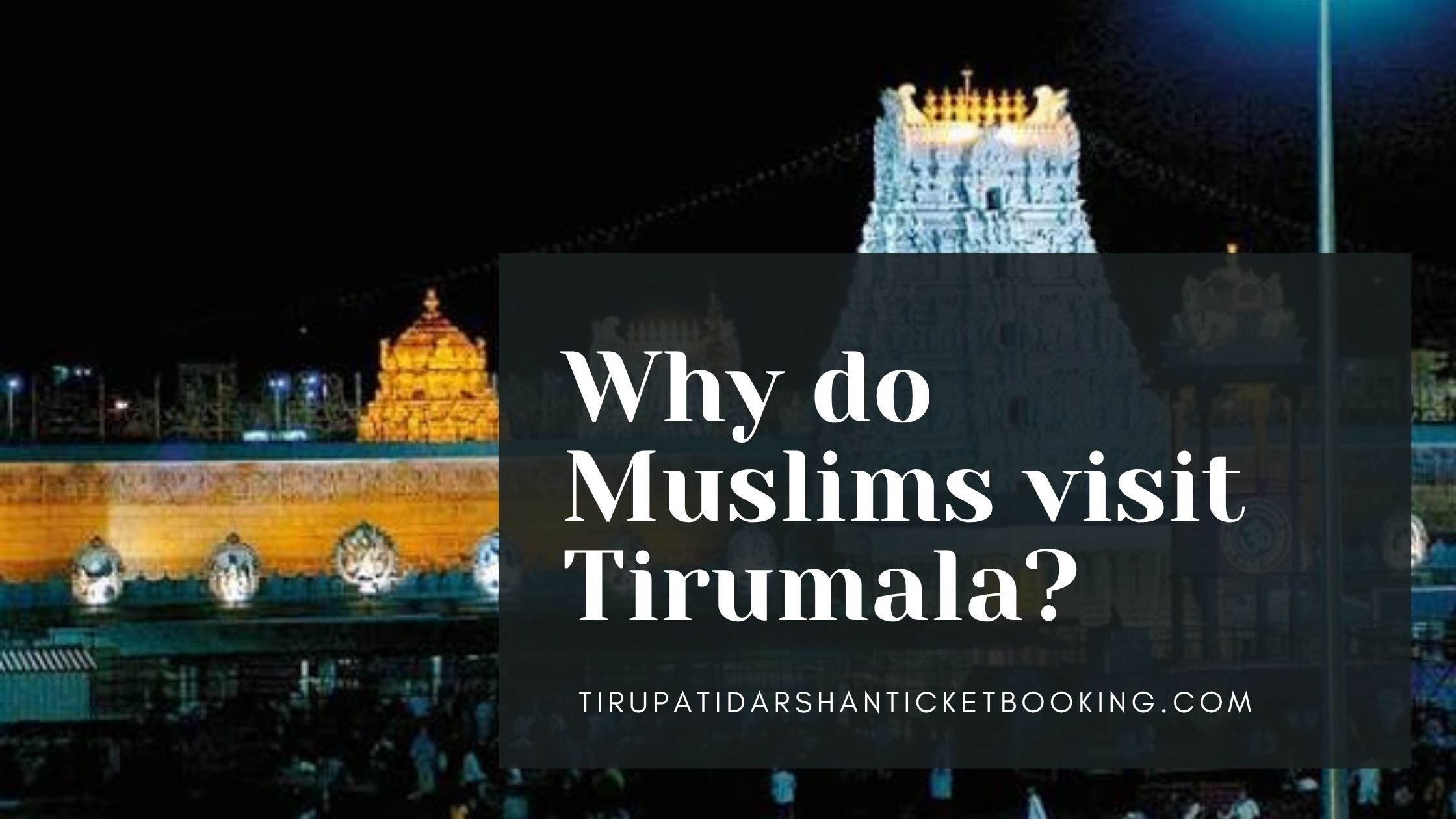
The question presumes a tension that does not exist in the historical record. Muslims have visited the Tirumala temple for centuries, and the practice is not a recent gesture of interfaith outreach or a modern accommodation of minority sentiment. It is rooted in a specific legend, sustained by a specific regional community, and documented in TTD's own institutional records.
The answer is not devotional in the way a Hindu pilgrim's visit is devotional. It is genealogical. A significant population of Muslims in the Rayalaseema region treats Lord Venkateswara as a son-in-law — a relationship established through the legend of Bibi Nancharamma, who is described in temple tradition as one of the deity's consorts.
To understand how this relationship sits within the broader architecture of temple access and rules, you may find our guide on who can touch the Tirumala idol useful, since the question of physical proximity to the deity is governed by rules that apply across all faiths. For the practical framework of what is and is not permitted inside the temple, our article on what is not allowed in Tirumala sets out the regulatory position, and our guide on do's and don'ts in Tirupati covers the behavioural expectations that apply to every pilgrim regardless of background.
The Legend of Bibi Nancharamma
The core of the tradition rests on the figure of Bibi Nancharamma, also rendered as Bibi Nanchari. In temple tradition, she is described as a Muslim woman who became one of the consorts of Lord Venkateswara.
The dating of the legend varies by source. One widely cited version places the marriage at approximately 1311 AD and identifies Bibi Nancharamma as the daughter of Malik Kafur, a general under Allauddin Khilji. Other accounts describe the connection as originating 800 to 900 years ago and treat the historical dating as secondary to the devotional relationship.
TTD's own institutional description of the tradition states that "Lord Venkateswara married one of his consorts, Bibi Nanchari, in an inter-religious event, leading to establishment of close relations between Hindus and Muslims in Kadapa." The phrasing is notable because it comes from TTD itself, not from a third-party source, and it is published as part of the temple administration's explanation of why Muslims are among the devotees who visit.
Because of this relationship, the Muslim community of the Rayalaseema region treats Lord Venkateswara as their son-in-law. The framing is not metaphorical in their usage. It carries obligations. A son-in-law receives gifts. A daughter receives offerings. The annual pilgrimage to Devuni Kadapa is structured around those obligations.
To understand how this fits with the deity's other attributes and iconography, our guide on why is Lord Venkateswara black covers the scriptural and iconographic explanations that temple tradition uses.
Devuni Kadapa: The Threshold of the Lord
The site where this tradition is most concentrated is the temple at Devuni Kadapa, in Kadapa district of Andhra Pradesh. The name translates roughly as "the threshold of the Lord."
According to TTD, it has been a tradition for centuries for devotees to first visit Devuni Kadapa before proceeding to the main Tirumala temple, some 120 kilometres away. The Kadapa temple functions as a preliminary stop, not a substitute.
The significance of Devuni Kadapa for Muslim devotees rests on two facts. First, the temple is associated with the Bibi Nancharamma tradition. Second, the town of Kadapa was founded by Neknam Khan, a chieftain of the Golconda kings, and the Muslim community there has maintained continuous residence for at least 350 years. The tradition is therefore not imported from outside. It is local, hereditary, and geographically anchored.
The head priest of the Venkateswara Swamy temple at Devuni Kadapa has described the position plainly: "For Muslims of the region, Lord Venkateswara is their son-in-law."
The Ugadi Tradition
The most visible expression of this relationship occurs on Ugadi, the Telugu New Year. On this day, hundreds of Muslim men, women, and children from across the Rayalaseema region visit Devuni Kadapa.
The structure of the visit is formalised:
| Element | Detail |
|---|---|
| Arrival time | From approximately 4:00 AM |
| Offerings carried | Flowers, jaggery, sugarcane pieces, tamarind, neem fruits |
| Special preparation | A dish called 'Vepapathi', made of jaggery and sugarcane |
| Dietary restriction | No non-vegetarian food consumed on the day of the visit |
| Preparation before entry | Bathing and dressing modestly |
| Reception from temple | Teertham and prasadam from the priests; harathi and blessings |
The observation that stands out from reporting on the day is the density of Muslim attendance. In a 2016 Ugadi observation, it was noted that every fourth person in the serpentine queue outside the Devuni Kadapa temple was a Muslim. That is not a symbolic presence. It is a substantial portion of the day's footfall.
The priest's framing of the queue is also worth noting. The same source observed temple priests offering harathi and blessings to Muslim devotees in the same manner as to Hindu devotees, with no distinction in ritual treatment.
Beyond Ugadi: A Year-Round Practice
The Ugadi visit is the most concentrated, but it is not the only observance. Many Muslim families in Kadapa district follow a practice in which the eldest child is expected to visit the temple at least once a year. If the Ugadi visit is missed, families arrange a substitute visit on another day before the next Ugadi cycle begins.
One devotee's account describes the household routine: waking at 4:00 AM on Ugadi, stopping non-vegetarian food several days in advance, and treating the visit with the same seriousness that accompanies Ramadan observance. The comparison is made explicitly by the devotees themselves.
This continuity across generations is what distinguishes the practice from a ritual gesture. It is transmitted through families, not through institutional instruction.
Muslim Donations to the Temple
The relationship has also produced substantial financial and material contributions to TTD.
The Golden Lotus and the Ashtadala Pada Padmaradhana
The Ashtadala Pada Padmaradhana ritual, conducted every Tuesday at the Tirumala temple, traces its origin to a donation by a Muslim devotee. In 1984, during the Golden Jubilee Year of TTD, a devotee presented the temple with 108 gold lotuses. The ritual was introduced to utilise them. It involves a priest offering a golden lotus at the feet of the deity while chanting each of the Lord's 108 divine names.
For context on how other large-scale donations have shaped temple practice, our article on who donated 121 kg gold to Tirupati covers the recent record-setting donations and how TTD handles them.
The 2022 Donation
In September 2022, Abdul Ghani and Subeena Bhanu, a Muslim couple from Chennai, donated ₹1.02 crore to TTD. The donation was split between ₹87 lakh worth of furniture and utensils for the newly constructed Padmavathi Rest House and ₹15 lakh to the Sri Venkateswara Nithya Annaprasadam Trust, which funds the free meal programme.
The donation was formally received by the TTD Executive Officer, with temple officials offering Vedasirvachanam and prasadam to the donors. Abdul Ghani's association with the temple extended back decades, and his earlier donation of 108 golden flowers is the source of the Tuesday ritual described above.
To understand the framework within which these donations are received and what privileges they confer, our guide on how to pay 1 lakh to TTD explains the donor privilege system and the 80G tax treatment.
TTD's Institutional Position
TTD has not treated the Muslim devotee tradition as an anomaly to be managed. It has acknowledged it in published materials and taken steps that suggest a willingness to expand the relationship.
In February 2024, TTD announced it would explore the possibility of allowing Muslim devotees to participate in Srivari Seva, the voluntary service programme associated with the temple. The decision followed a request from a Muslim devotee during TTD's monthly "dial your EO" programme. The TTD Executive Officer noted at the time that "several devotees belonging to other faiths have been making donations to the deity" and expressed appreciation for their dedication, directing that the feasibility of the request be examined.
The TTD website itself describes the Ugadi tradition at Devuni Kadapa as a matter of record, not as a curiosity.
The Documentation Requirement for Non-Hindus
The devotional relationship does not exempt Muslim visitors from the procedural requirements that apply to non-Hindus at the Tirumala temple.
Non-Hindu devotees are permitted entry but must sign a self-declaration form affirming faith in the presiding deity, in accordance with the TTD Act rules. The form is submitted before darshan. This requirement applies to all non-Hindus, including visiting dignitaries; a former President of India signed the same declaration during his visit.
The dress code also applies without exception. Traditional attire is required. To understand the specific requirements, our guide on what is the dress code for VIP break darshan at Tirumala sets out the permitted and prohibited clothing.
For devotees planning a visit, our article on who is eligible for VIP darshan in Tirumala explains the eligibility categories, and our guide on what is the process of VIP darshan in Tirumala covers the procedural steps from booking to reporting.
What This Tradition Is and Is Not
Three clarifications are worth making, because the question is frequently answered in ways that either overstate or understate the practice.
It is not a recent phenomenon. The tradition traces to the 14th century or earlier, depending on the source. It predates modern interfaith dialogue by several hundred years.
It is not limited to token representation. The Ugadi queue at Devuni Kadapa is described as containing substantial Muslim presence, not a handful of symbolic attendees. The practice is maintained by families across generations.
It is not a claim of doctrinal equivalence. The Muslim devotees who observe this tradition describe Lord Venkateswara as their son-in-law. They do not describe him as Allah. The relationship is specific, familial, and regional, and it is understood on those terms by both the devotees and the temple administration.
Frequently Asked Questions
Why do Muslims visit Tirumala? Because of the tradition of Bibi Nancharamma, a Muslim consort of Lord Venkateswara. Muslims in the Rayalaseema region treat the deity as their son-in-law and maintain a hereditary practice of visiting Devuni Kadapa and Tirumala.
Who was Bibi Nancharamma? A Muslim woman described in temple tradition as one of the consorts of Lord Venkateswara. Some accounts identify her as the daughter of Malik Kafur and date the marriage to approximately 1311 AD.
Do Muslims visit the main Tirumala temple or only Devuni Kadapa? Both. Devuni Kadapa is the traditional first stop, described as the "threshold of the Lord." The main Tirumala temple is visited after, though many families observe the Devuni Kadapa visit as the primary annual obligation.
Can Muslims enter the Tirumala temple? Yes. Non-Hindus are permitted entry but must sign a self-declaration form affirming faith in the presiding deity. The dress code applies without exception.
Do Muslims need a darshan ticket? Yes. All darshan categories require tickets or tokens, and the same booking rules apply. Our guide on can I get same-day darshan at Tirumala covers the same-day options that are available to all devotees.
Have Muslims donated to TTD? Yes. The Ashtadala Pada Padmaradhana ritual traces to a 1984 donation of 108 gold lotuses by a Muslim devotee. In 2022, Abdul Ghani and Subeena Bhanu donated ₹1.02 crore to TTD. Our article on who donated 121 kg gold to Tirupati covers the recent record donations and how TTD handles large gifts.
Does TTD officially acknowledge this tradition? Yes. TTD's own materials describe the Bibi Nanchari marriage as the origin of close Hindu-Muslim relations in Kadapa, and TTD has explored allowing Muslim devotees to participate in Srivari Seva.
How many Muslims visit on Ugadi? Reporting from 2016 observed that every fourth person in the Devuni Kadapa queue on Ugadi was a Muslim. The figure is not a formal TTD statistic but indicates substantial participation.
A Note on How This Tradition Is Framed
The instinct when writing about this subject is to frame it as an example of "communal harmony" — a phrase used frequently in press coverage. The framing is not wrong, but it is imprecise. Communal harmony describes a coexistence between groups that might otherwise be in tension. The Bibi Nancharamma tradition describes something different: a shared family relationship in which the deity is claimed as a relative by a specific community.
That distinction matters because it explains why the practice has survived for centuries without institutional management. It is not maintained by TTD's outreach efforts. It is maintained by families who consider the obligation hereditary, in the same way other families maintain obligations to their own ancestral deities.
For pilgrims planning a visit regardless of background, our guide on is there rush in Tirumala tomorrow covers current crowd conditions, and our article on which day has less rush in Tirumala helps with date selection. Our guide on how many people get darshan in Tirumala per day sets out the daily footfall figures, and our article on what is the cost of VIP darshan in Tirumala and our guide on how much does VIP Break Darshan cost at TTD cover the premium darshan pricing for those considering the faster categories.